Microsoft XNA is a set of tools with a managed runtime environment, built on top of DirectX, that facilitates video game development for a variety of Microsoft platforms, including the Xbox 360, Windows Phone, the Zune media player and desktop Windows.
While working on our first title, we soon realised that the XNA framework was a solid foundation for game development, but that some basic network, graphics, audio and input device features were still missing. That is why I developed the Comprehensive Realtime Framework to Build Networked Xbox 360 Online Games, placing special emphasis on reusability in future games.
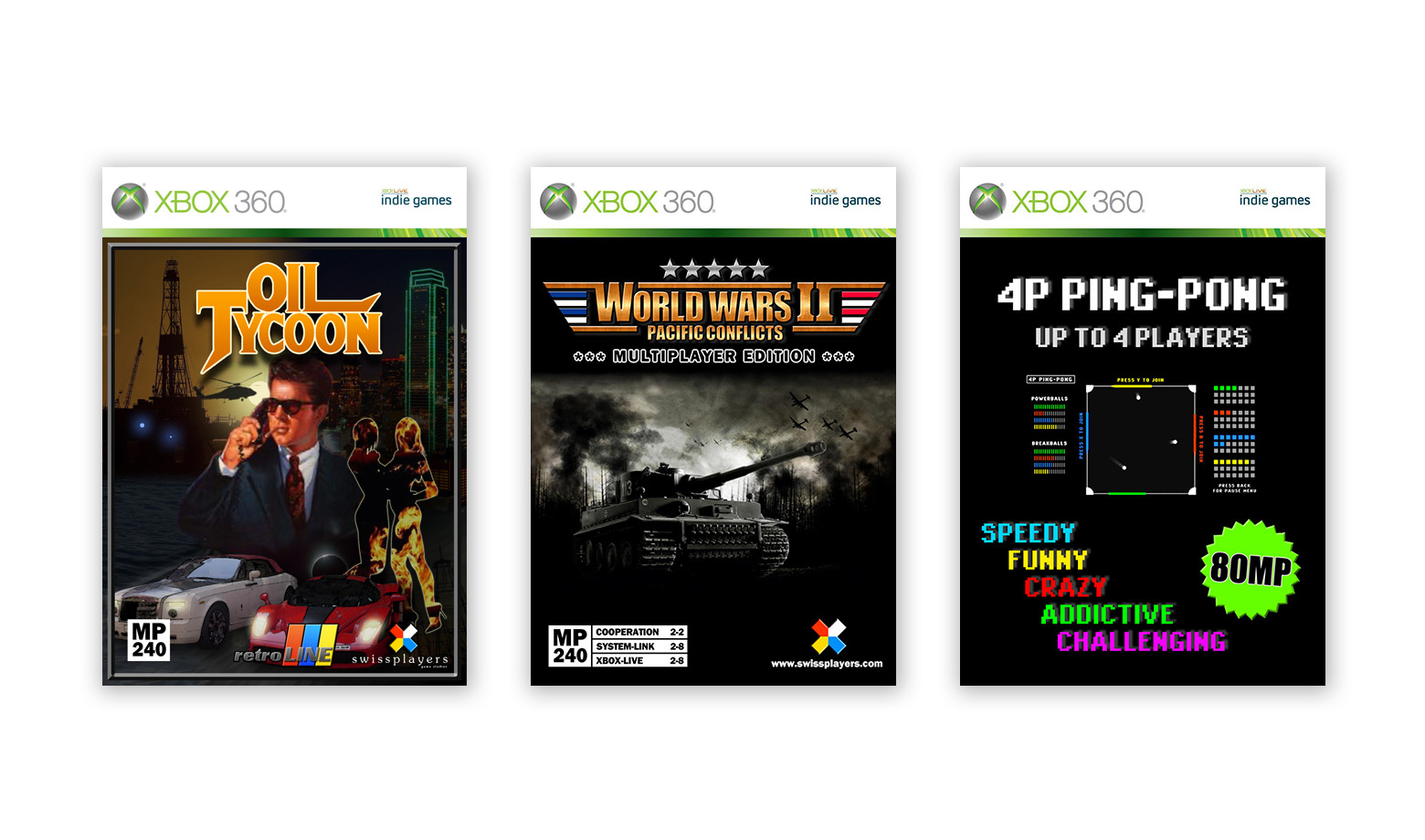
Between 2010 and 2012, my teammate and I developed six games for the Xbox 360 and published them on the Xbox Live Indie Games marketplace. Here are some of them!
Oil Magnate
This game is a remake of one of my personal favourites from the early 1990s, Oil Imperium, which was released for the Amiga, Atari, C64 and MS-DOS in 1989.
The goal of the game is to produce and sell oil and to defeat your competitors using a number of fair and unfair strategies. The game is turn-based and designed for four players, each either human or controlled by artificial intelligence.
The major challenge was to implement a functioning, well-balanced economic simulation and artificial opponents that would be neither too hard nor too easy for the player. Judging by the numerous and highly positive reviews we received from external game testers, we succeeded.
World Wars – European Conflicts
This game deals with the events of the war between 1939 and 1945 and belongs, in a broader sense, to the genre of conflict simulation games. The basic idea was to create a game similar to the famous board game Axis&Allies, but to replace the element of luck in rolling dice with a top-down combat game.
The initial release took around 12 months, including graphic design, video editing and lots of programming, resulting in roughly 200,000 lines of code written in C#.
World Wars – Pacific Conflicts
This game is the sequel to World Wars, which was a great success with over 35,000 copies sold, and covers the events in the Pacific theatre during the Second World War. We implemented many new game features. The highlight was a new multiplayer mode in which teams of 4 players could compete against each other. Since Microsoft only allowed 8 kB/s to be exchanged per session over their game servers, designing a highly effective and efficient network protocol to keep the states of 8 players in sync was quite a challenge. We also had to deal with network latency, which we solved by introducing some rather elaborate prediction algorithms, based on previous unit movements, for cases where latency exceeded the acceptable threshold.
You play one of three different game modes on 10 different multiplayer maps, each with its own strategic twist. Control the strategic points on the map in Capture the Flag, find and bring back the hidden gold treasure faster than your opponent in Save the Gold or fight to the last man standing in Death-Match mode.
Four Player Ping-Pong
Four Player Ping Pong is an extended successor to the very first computer game, Pong. With various improvements, such as a 4-player mode and brake and power balls, it offers a very exciting gaming experience.


